The Purpose of Curating Environmental Art

· LAND · ADAPTATION · COMMUNITY · CREATIVE ECOLOGIES · THEORY · SEA · COMMUNICATION
· LAND · ADAPTATION · COMMUNITY · CREATIVE ECOLOGIES · THEORY · SEA · COMMUNICATION







· PLANTS · PIGMENTS · DISCUSSION · MOUNTAINS · COLOUR · NETWORKS · PHILOSOPHIES · SKY
· PLANTS · PIGMENTS · DISCUSSION · MOUNTAINS · COLOUR · NETWORKS · PHILOSOPHIES · SKY
Within the Land Art Collective, we view curation as a sacred act of translation between the artist, the land and the viewer. To engage in curating environmental art is to step into a role of stewardship, where the exhibition itself becomes an extension of the ecological message. It is not merely about the placement of objects in a room, but about creating a resonant space where the stories of the Earth can be heard with clarity and wonder.In this era of rapid change, the way we present art must reflect the values of the world we wish to see.
Our approach to curation prioritises the integrity of natural materials and the ethical considerations of a sustainable art practice. By focusing on the intersection of Land, Sea and Sky, we help practitioners develop the skills to curate experiences that are restorative and thought provoking. We invite you to explore how the intentional arrangement of creative work can act as a catalyst for environmental activism and deep nature connection.
Within the Land Art Collective, we view curation as a sacred act of translation between the artist, the land and the viewer. To engage in curating environmental art is to step into a role of stewardship, where the exhibition itself becomes an extension of the ecological message. It is not merely about the placement of objects in a room, but about creating a resonant space where the stories of the Earth can be heard with clarity and wonder.In this era of rapid change, the way we present art must reflect the values of the world we wish to see. Our approach to curation prioritises the integrity of natural materials and the ethical considerations of a sustainable art practice. By focusing on the intersection of Land, Sea and Sky, we help practitioners develop the skills to curate experiences that are restorative and thought provoking. We invite you to explore how the intentional arrangement of creative work can act as a catalyst for environmental activism and deep nature connection.
Places to start:
-
![Hands covered in soapy lather, rubbing together to wash.]()
Talks & Workshops
Learn with a cohort of international creative practitioners at our online talks & workshops.
-
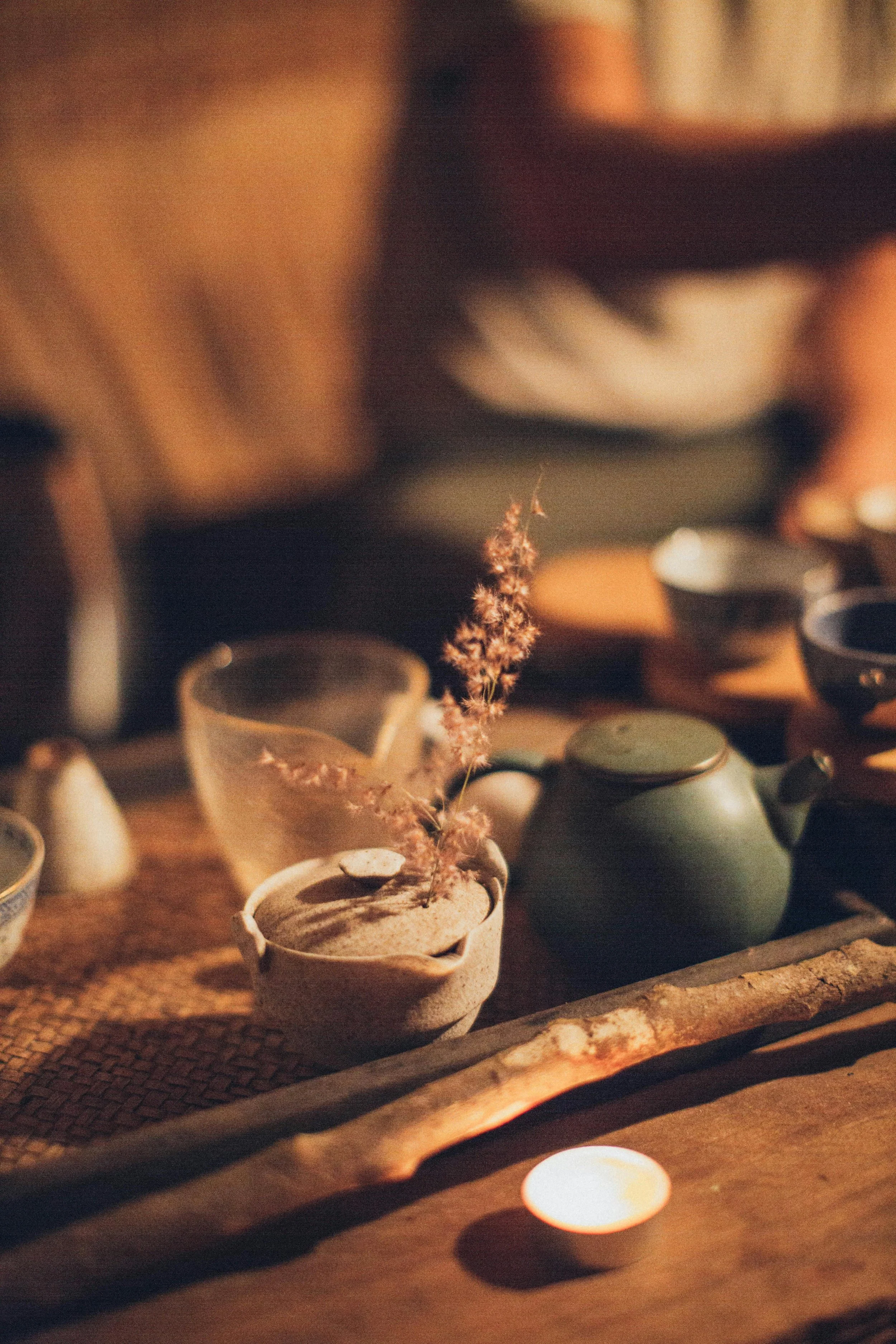
![A cozy, warmly lit table with a small potted plant, various teacups, and a lit candle.]()
Land Art Membership
See what our creative community has to offer you.
-
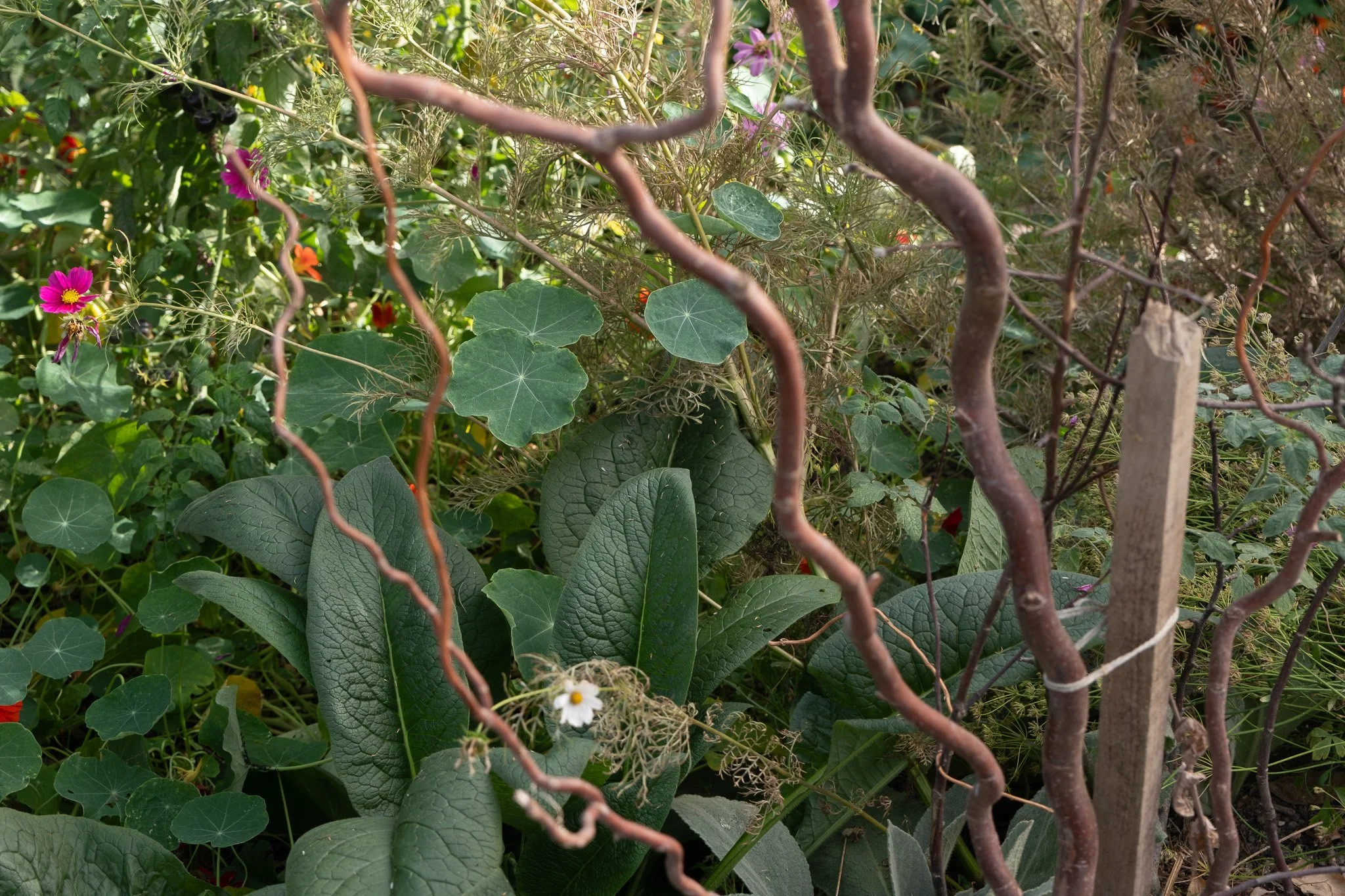
![Close-up of green leafy plants, including large leaves and small flowering plants with pink, orange, and white flowers, behind a rusty wire fence and wooden stake.]()
Lessons in Listening
Discover our online and in-person creative residency.
-
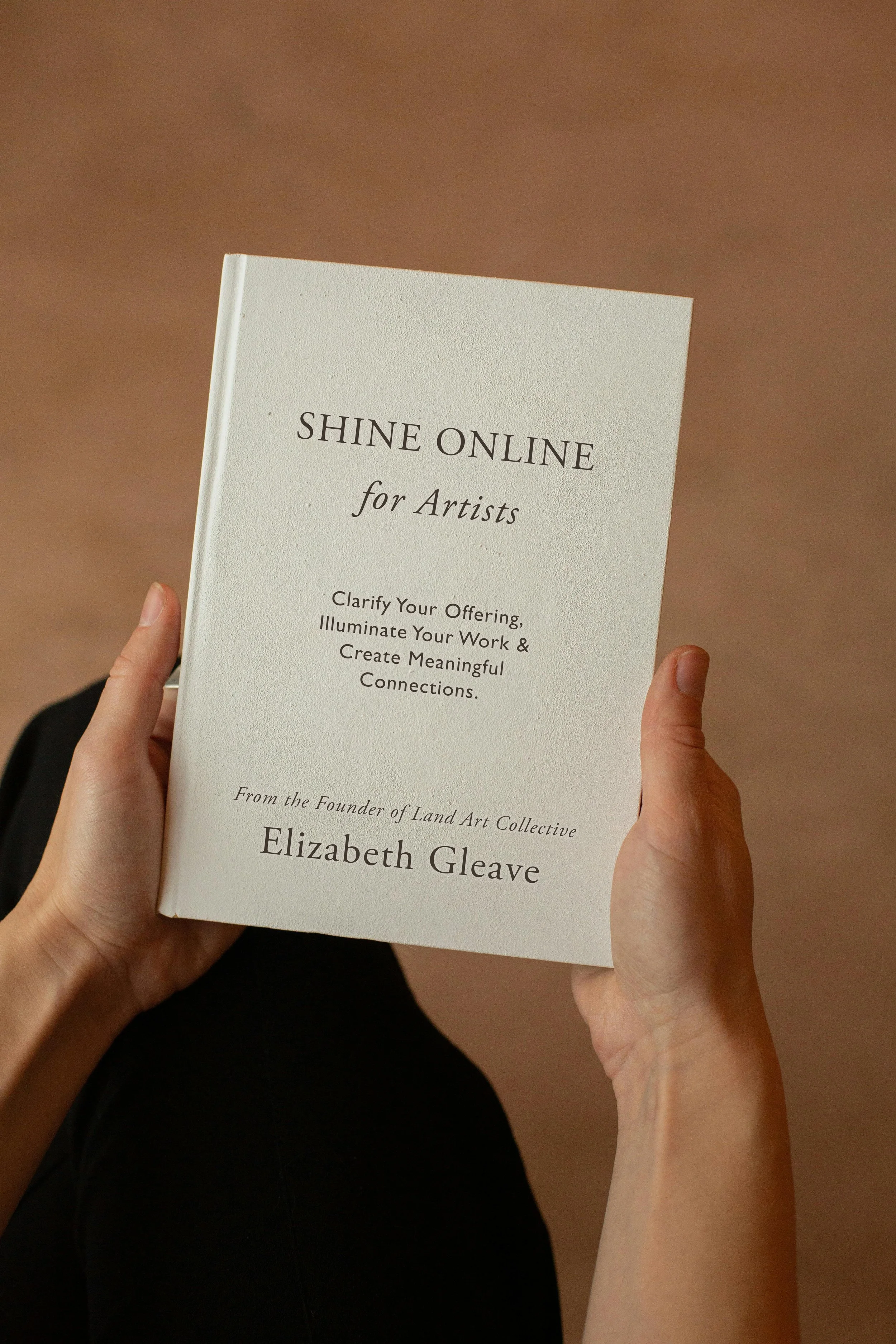
![Person holding a book titled 'SHINE ONLINE for Artists' with subtitle and author information on a neutral background.]()
Shine Online
A Guide Book for Artists to align their practice and shine online! From Land Art Co-Founder Elizabeth Gleave.
Creating an Environmental Art Exhibition
Curation as a Tool for Social Change
Curating an environmental art exhibition requires a deep understanding of the delicate balance between the physical work and the ecological context from which it emerged. At the Land Art Collective, we believe that every exhibition should function as a living organism, breathing life into the conversations surrounding our planet. When we approach curation, we look for the threads that connect individual pieces to the wider landscape, ensuring that the collective voice of the artists creates a powerful, unified invitation for the audience to re-engage with the natural world.
Curation is also a potent tool for social change, allowing us to highlight the urgent narratives of our time through a creative lens. By thoughtfully curating socially engaged art, we can bridge the gap between scientific data and emotional understanding. This process involves more than just selecting aesthetics; it is about choosing works that challenge the viewer to reflect on their own relationship with the Earth. Our framework for curating focuses on creating accessible, inclusive spaces where diverse perspectives on ecology can flourish and inspire collective action.
Standards for Sustainable Curatorial Practice
Professional development for artists in the ecological sphere requires a unique approach that honours the source of our materials and the places where we work. We offer structured feedback sessions, portfolio reviews and masterclasses that focus on the practicalities of a land based practice. From learning soil chromatography to exploring bio based inks, our workshops provide the tools needed to manifest your vision. We believe that creativity is a muscle that requires imaginational wellbeing, and our programmes are crafted to nurture that muscle with the nutrients it requires to flourish.To build a sustainable art practice, one must look at the decisions we make as part of the landscape's memory. We encourage our members to explore regenerative ways of thinking and making, ensuring that their work is a solution rather than a burden on the cosmos. This involves fine tuning the skills of listening to the land and allowing the unpredictable, alive essence of natural materials to guide the process. By prioritising these ethical and sustainable approaches, we help you create a body of work that truly honours the maker, the viewer and the Earth itself.
Collaborative Participation in our Community
Ethics and Materials in Curation
Professional Development for Curators
A sustainable art practice must extend into the way work is presented and shared with the public. When curating, we must consider the footprint of the exhibition itself, from the lighting and transport to the materials used for plinths and signage. We encourage curators to think regeneratively, sourcing local materials and seeking out carbon-neutral ways to bring art to the community. This commitment to ethics ensures that the medium of the exhibition does not contradict the environmental message of the artwork, maintaining a sense of integrity throughout the process.For those seeking professional development, understanding the nuances of curating within the ecological sphere is essential for career growth. We provide mentoring and resources that delve into the practicalities of managing an environmental art gallery or pop-up exhibition. This includes learning how to navigate the logistical challenges of working with raw, natural materials that may change or decay over time. By mastering these skills, curators can better support artists in manifesting their vision while ensuring the work remains a solution-focused contribution to the creative community.
Collaborative Curation in the Collective
Engaging with the Art Community
The Future of Ecological Curation
The Land Art Collective fosters a spirit of collaborative curation, where members are encouraged to share their work and insights within our international network. This peer-to-peer approach allows for a rich exchange of ideas, where the act of curating becomes a communal effort rather than a solitary task. By participating in our digital and physical showcases, you can experiment with new ways of presenting your practice to a global audience. This collaborative environment nurtures a sense of belonging and helps to refine the way we communicate sustainability through the arts.Looking toward the future, the role of curation in the art and ecology movement will continue to evolve as we find new ways to connect with the living world. We are dedicated to exploring the boundaries of curation, from site-specific land art installations to immersive online workshops. As our community grows, so does our capacity to influence the wider art world, advocating for a shift toward more mindful and regenerative curating practices. We invite you to join us in this ongoing exploration, trusting that the stories we choose to highlight today will shape the landscape of tomorrow.
Frequently Asked Questions
-
Curation is the overarching philosophy and professional field of managing and overseeing a collection or exhibition. Curating is the active, hands-on process of selecting, organising and presenting specific works of art. Both are vital to ensuring that environmental art is communicated effectively to an audience, and we provide support for both the theory and the practice within our collective.
-
Curating art made from natural materials requires an understanding of the material's lifecycle. It often involves considering how the work interacts with the environment, such as how it might dry, change colour or biodegrade. We teach curators how to embrace these changes as part of the narrative, ensuring the exhibition remains a truthful representation of the artist's dialogue with the land.
-
Yes, curation is a powerful form of activism. By choosing to highlight specific ecological themes and artists who work with sustainable practices, a curator can direct public attention toward critical environmental issues. A well-curated exhibition can evoke empathy and inspire viewers to take tangible steps toward protecting the natural world, making it a key component of creative advocacy.
-
A sustainable exhibition considers its entire environmental impact. This includes using recycled or compostable materials for displays, minimising energy consumption and avoiding single-use plastics. It also involves working with artists who use non-toxic, earth-friendly mediums. At the Land Art Collective, we promote these standards to ensure that the art world contributes positively to the health of our planet.
-
Starting to curate your own work begins with identifying the core themes and stories you wish to share. We recommend looking at your portfolio through the lens of a curator, finding the connections between different pieces. Our mentoring sessions can help you develop the skills to organize your work into a cohesive narrative, whether for an online gallery, a physical space or a professional portfolio.
-
When we choose to curate our creative lives with intention, we are teaching ourselves and our families to value the connections between all living things. By supporting and viewing art that honours the Earth, you are participating in a cultural shift toward a more restorative and mindful way of living. This commitment to ecological curation ensures that the beauty of the natural world is celebrated and protected, creating an inspired legacy of wonder and environmental stewardship for the generations that follow in our footsteps.