Botanical Cyanotypes
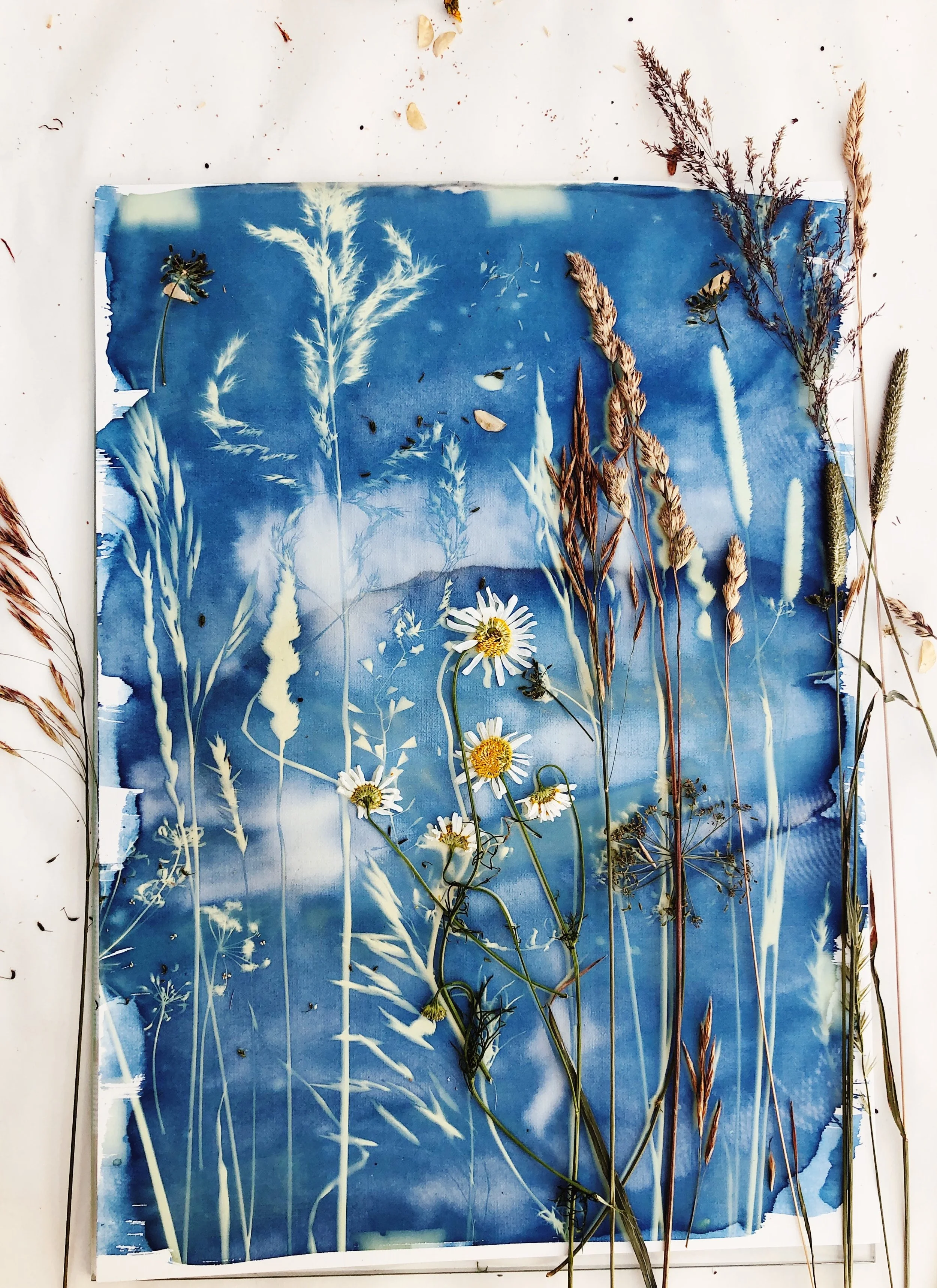
You will learn how to bleach cyanotype with oak bark and/or soda crystals. In addition to this, you will find out how to tone cyanotypes with tannin-based substances such as green tea, coffee, and red wine.
Join Melanie King to discover how to alter the colour of cyanotypes with sustainable botanical toners.

2 Hour Live Session with Melanie King
£40
All sessions are recorded and made available for a week following the course.
This also includes times for any feedback questions.

IN A 2 HOUR LIVE SESSION:
-
Learn
You will make cyanotypes during the workshop, which will provide a base for bleaching and toning.
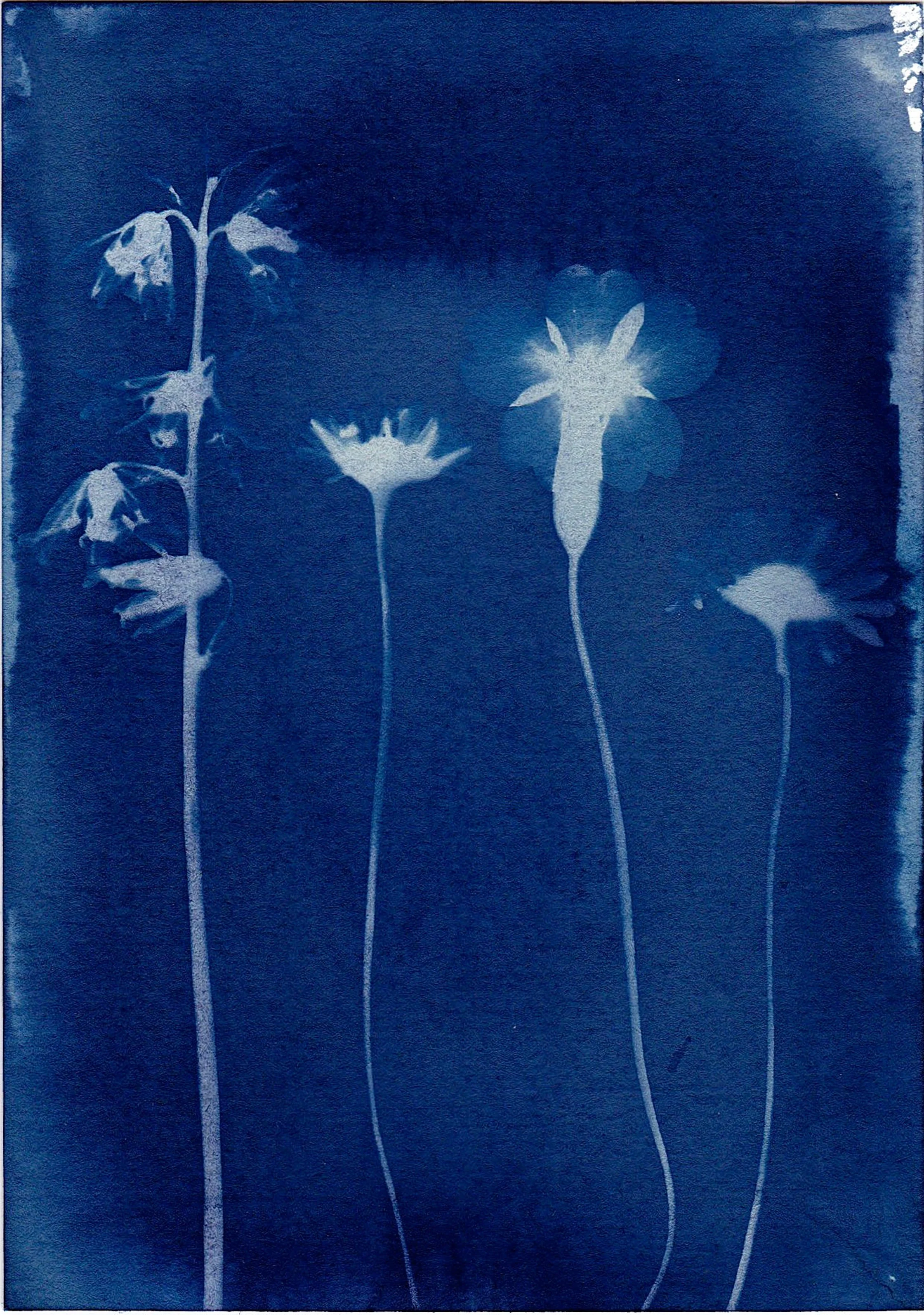
The cyanotype is an environmentally friendly iron-based photographic process which is known for its strong blue colour.
It is possible to alter the blue colour with bleaches and tannins to achieve yellow, purple, brown and tones that are close to black
-
Cyanotype Kit List
Pottassium Ferricyanide
Ammonium Ferric Citrate
Foam or Goat Hair brush.
Paper (Fabriano Accademia 200GSM+, Arches Platine, Somerset Satin, Hahnemuhle Platinum Rag work well)
Transparencies, Negatives or objects to make shadows with.
Access to water
Jugs / Trays / Gloves
Contact printing frame or clip frame
Pegs
Sunlight or UV light if Autumn/Winter
You can also bring along cyanotype prints that have “failed” to experiment with.
-
Toning
Kettle or method of boiling water
Bleaching material (Bicarbonate of Soda, Oak Bark)
Tannin material (Green tea, coffee, red wine, oak gall, acorns etc).
Trays and Jugs
Access to water
Ventilation (near window or in darkroom)
Series Feedback

Workshop
Host
Melanie King
Melanie King is a visual artist and practice-based researcher at the Royal College of Art. She is interested in the relationship between starlight, photography and materiality. Her PhD practice-based research "Ancient Light" considers how light travels thousands, if not millions of years, before reaching photosensitive film or a digital sensor. Her main body of photographs “Ancient Light” comprises of a series of analogue photographic negatives and prints of star-scapes, as well as a series of images created using telescopes and observatories around the world. Alongside this body of work, Melanie has produced 16mm films of the Moon and photographic etchings created using meteorite-imbued ink, milled at the Royal School of Mines. Melanie has produced daguerreotypes and world-record sized cyanotypes exploring the relationship with the Sun and photosensitive material. The purpose of her research is to demonstrate the intimate connection between celestial objects (sun, moon, stars), photographic material and the natural world. Melanie is currently researching sustainable photographic processes, to minimise the environmental impact of her artistic practice.